
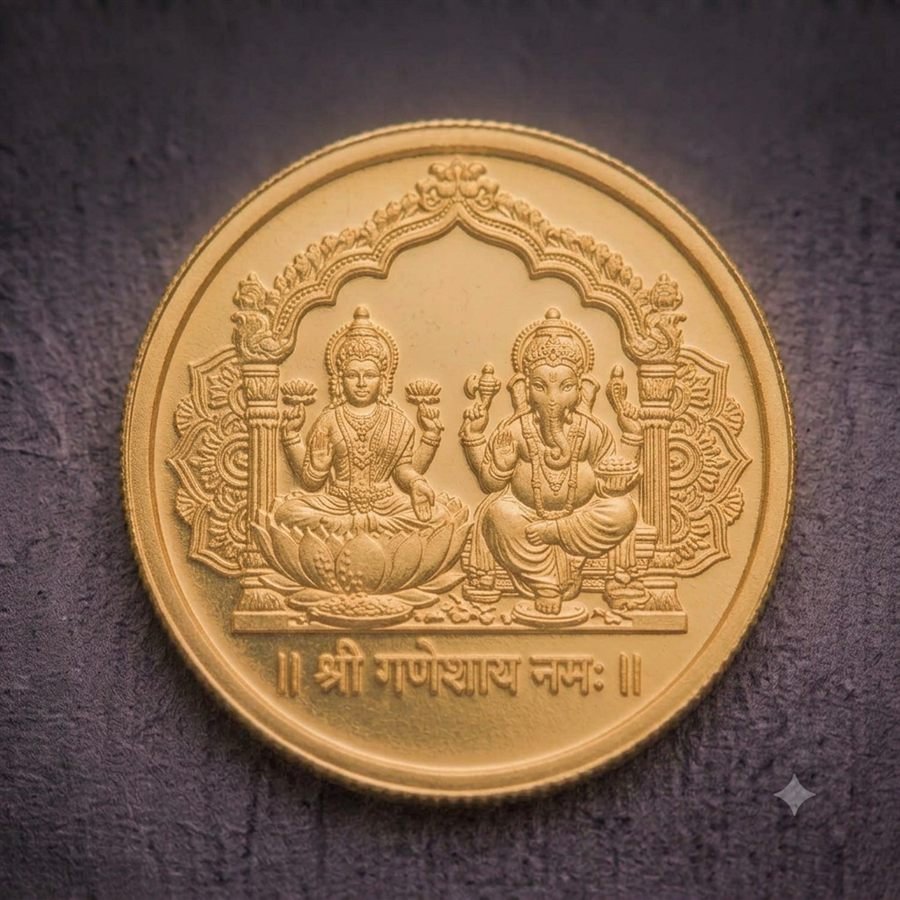
Ask any Indian household why they keep gold coins, and you will get three answers in one breath: lakshmi, suraksha, and shagun. Gold coins are the rare product that is simultaneously an investment, a ritual object and insurance — which is exactly why the market around them is full of fog. This guide clears it.
24K, 22K, 18K — what the numbers actually mean
"Karat" is simply the share of pure gold in the piece. 24K is 99.9% pure; 22K is 91.6% (the rest is copper/silver for strength); 18K is 75%. For investment, jewellers and buy-back desks price 24K coins at the metal rate with minimal making charge — that is why gifting coins, not jewellery, is the smart wealth move.
When do Indians buy gold coins?
- Dhanteras & Akshaya Tritiya — the two marquee buying days; Lakshmi-Ganesha coins top every wishlist.
- Weddings — a coin in the envelope is blessing and seed capital for the couple.
- Housewarming (Griha Pravesh) — a silver or gold coin placed at the puja corner.
- First salary / new born — one gram of permanence beats any flower bouquet.
How to verify a coin is what it claims
- Look for the BIS hallmark — a 6-digit HUID mark, or the mint’s assaying certificate for legal-mint coins.
- Check the invoice — weight, karat and purity must be printed. A GST invoice is your proof of purchase and your sell-back ticket.
- Weigh it — a 8g 22K coin should read 8.000g ± mint tolerance on any calibrated scale.
- Buy rate-transparency — if a seller cannot show you metal value vs making charges separately, walk away.
The one-line rule
For wealth, buy purity; for style, buy design — and never pay jewellery making charges for something you intend to sell back.
At PMJ GOLD every coin page shows the live breakup — metal value, making charge, GST — before checkout, with the order PDF on WhatsApp within minutes of payment. See current coins →
